
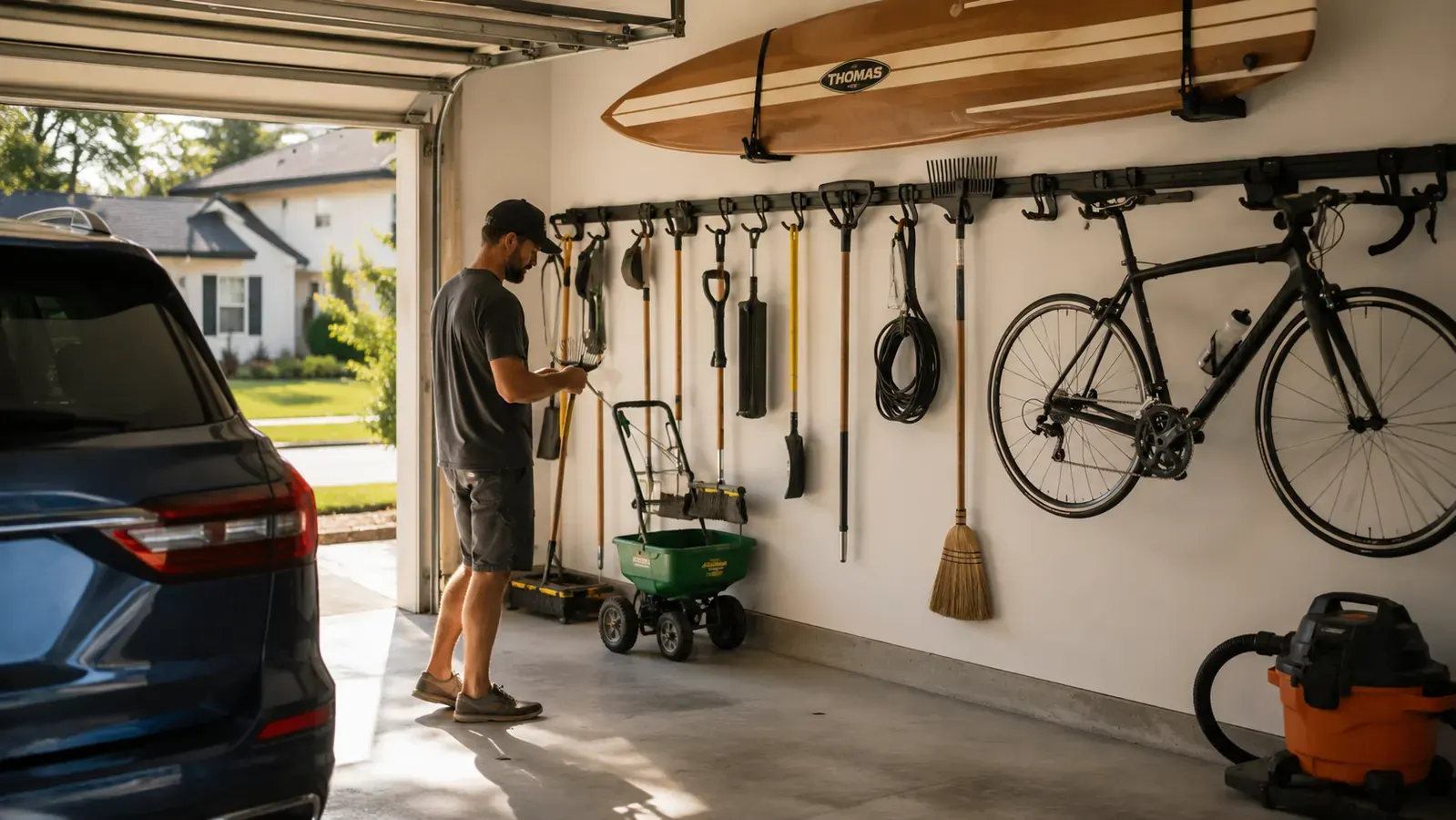
My client Greg called me in late February, frustrated. He had tried pegboard twice, tried a generic wall-hook kit from a big-box store, and was now looking at a garage where two lawnmowers, a bike, four kinds of shovels, and a leaf blower competed for the same twelve square feet of floor space. He is 58 years old, works long days, and does not want to park in the driveway anymore. That is the exact situation the Rubbermaid FastTrack 15-piece kit was designed for, and that is the exact situation where I installed one in March of last year.
I have been organizing homes professionally for fifteen years. I have installed this system in garages ranging from 400 square feet to 1,200 square feet, on drywall, on OSB, and once on a concrete block wall with toggle bolts. I keep coming back to it not because it is glamorous, but because it holds up. A lot of products look good on day one. The FastTrack looks just as good on day 365, and that is the difference that matters when you are recommending something to a real household with real use patterns. Here is what a full year with the 15-piece kit actually looks like.
The Quick Verdict
A genuinely durable wall-rail system that installs in a few hours, handles real loads without creeping, and lets you reconfigure without repainting. The hook variety in the base kit is limited, but the add-on ecosystem makes up for it.
Amazon Check Today's Price →Your garage floor is not a storage system. This wall rail is.
The Rubbermaid FastTrack 15-piece kit includes 4 rails and 11 hooks, rated to 1,000 lbs combined wall load. Check today's price before the kit goes on backorder.
Amazon Check Today's Price on Amazon →How I Have Used It Over 12 Months
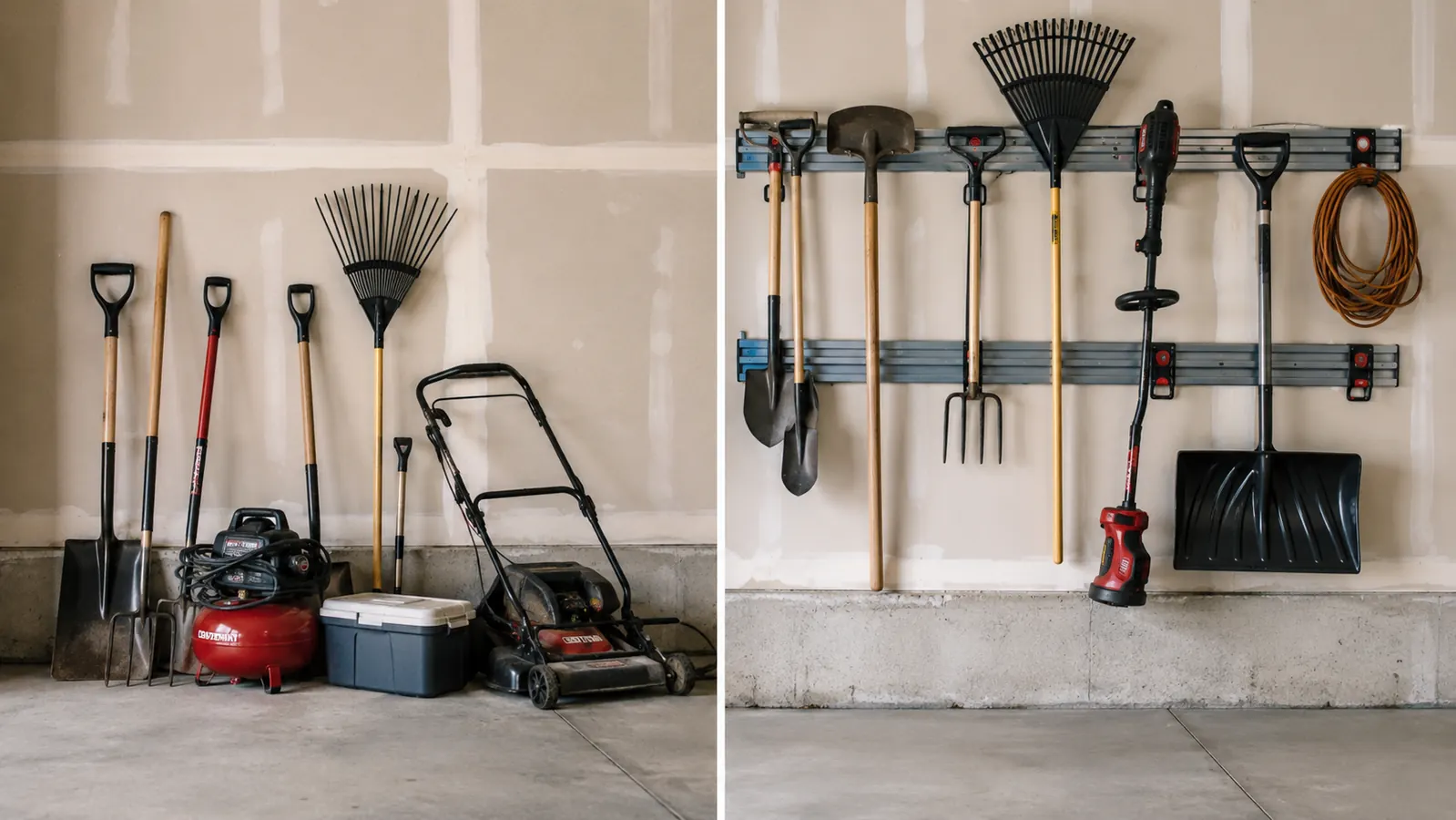
Installation took me about two hours in Greg's garage, working alone. The four rails each span 48 inches and mount to studs. I used a stud finder, pre-drilled pilot holes, and drove the included 3-inch screws. The rails sit flush and level without much fussing. The hardest part was deciding on height. I put the primary rail at 72 inches to clear the longer tool handles and a secondary rail at 48 inches for shorter items and the bike hook. That two-rail configuration gave us about 16 linear feet of hookable space on a single wall.
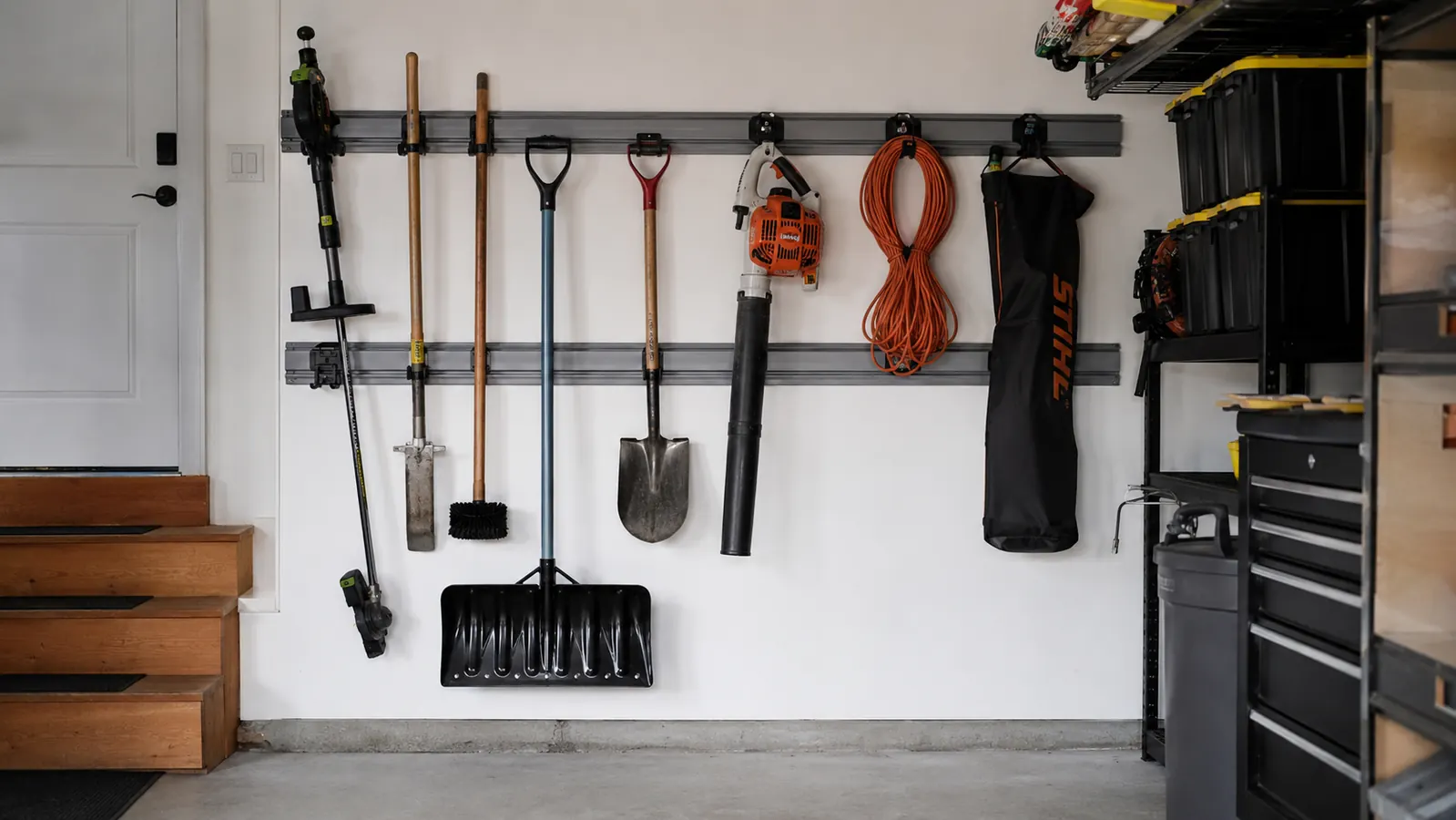
In the first week I loaded the system with a push mower handle, three long-handled shovels, a leaf blower, a garden hose reel, the bike, two rakes, and a utility shelf holding paint cans. That is a serious load. I revisited in June during a garage cleanout, again in September when we swapped summer for fall tools, and again in December for the snow gear rotation. Each time I found the same thing: the rails had not shifted, the hooks had not drooped, and the wall attachment points showed no cracking or settling. That kind of stability over repeated seasonal transitions is exactly what separates a real system from a temporary fix.
One thing I want to be specific about is temperature. Greg's garage is uninsulated. This past summer it hit 107 degrees Fahrenheit in there during a heat wave. The rails are steel with a resin coating. They did not warp, deform, or release the paint. The hooks are a glass-reinforced nylon composite. I have seen cheaper hooks soften and sag in high-heat garages within a single summer season. These did not move.
The Rails: What the Specs Actually Mean in Practice
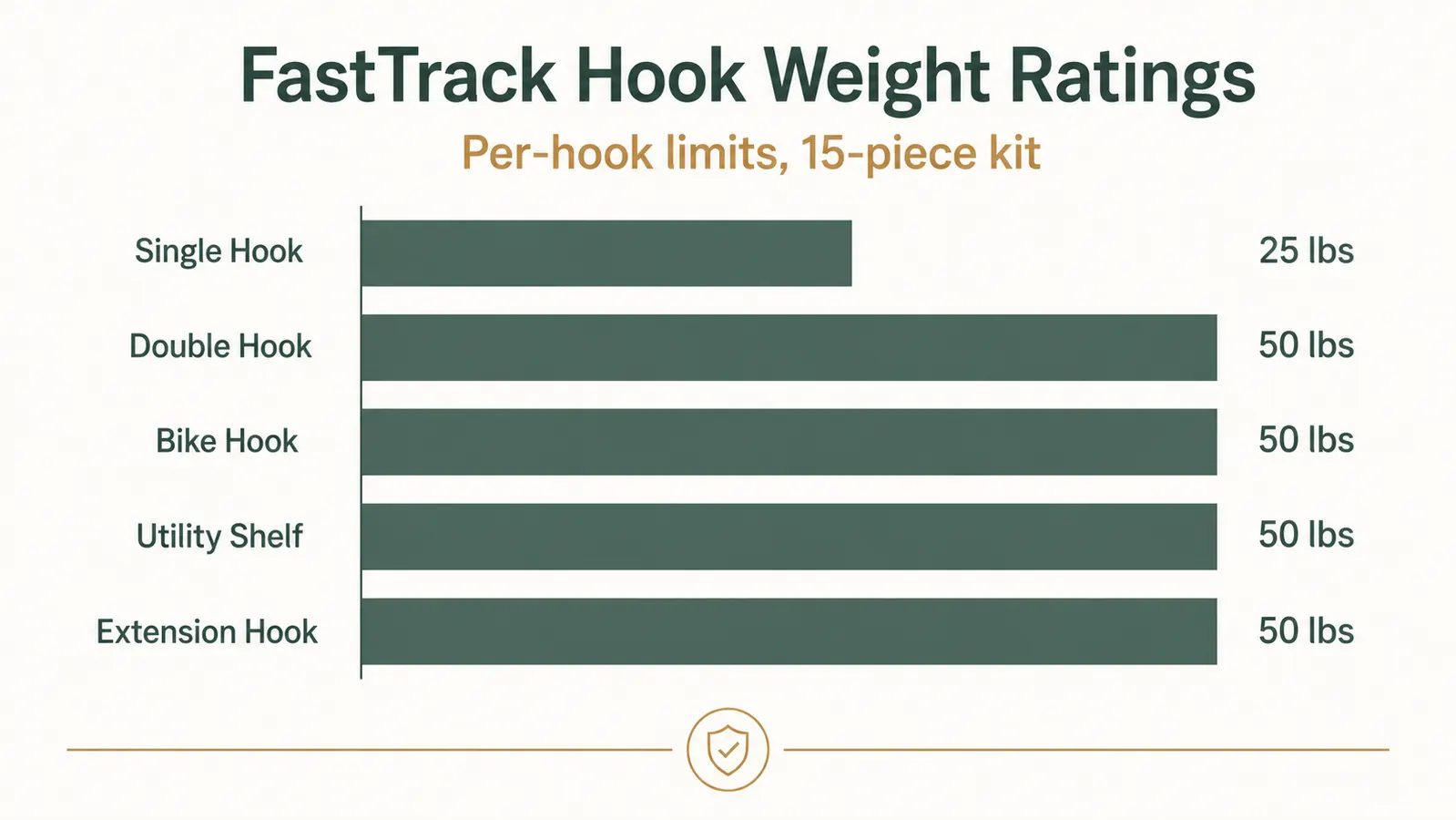
Each FastTrack rail is rated to support up to 1,750 lbs at the wall anchor. That number covers the rail mount, not the individual hook. Individual hooks are rated separately: single hooks at 25 lbs, double hooks and the bike hook at 50 lbs each, the utility shelf at 50 lbs. The 15-piece kit rates the total system at 1,000 lbs combined. In fifteen years I have never seen a homeowner come close to that combined limit. What matters more in practice is the per-hook rating and whether the hook interface stays tight under repeated loading.
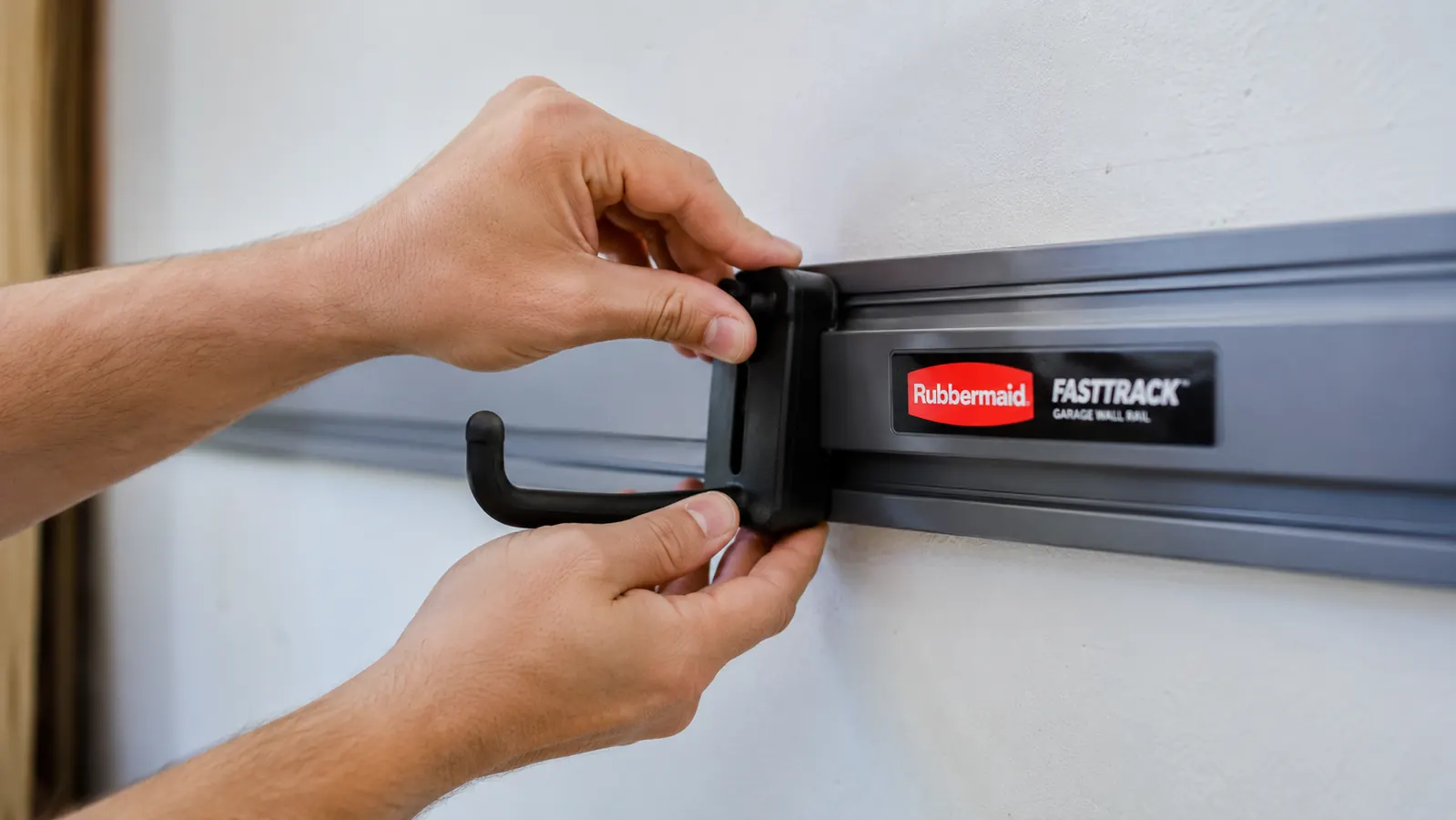
The hook attachment mechanism is a simple vertical slot that clicks over the top lip of the rail and locks when you push the bottom toward the wall. It takes about three seconds to install a hook and about three seconds to remove it. That might sound like a minor design detail, but in a garage that transitions between lawn season and snow season twice a year, that friction-free reconfiguration is actually the best feature of the system. I moved six hooks in fifteen minutes when Greg wanted to switch from summer to winter tool configuration. No tools required, no new holes, no patching, no repainting.
In fifteen years of installations, I have never had a client call me back to say a FastTrack rail pulled out of the wall under normal household load. That is the strongest endorsement I can give any hardware.
What Is Actually in the 15-Piece Kit (and What You Will Likely Add)
The kit includes four 48-inch rails and eleven hooks: two single hooks, two double hooks, one 11-inch hook for longer items, one bike hook, two small baskets, one utility shelf, one extension hook, and one short double hook. That is a reasonable starter configuration for a two-car garage with a mixed tool set and one bike. It is not a complete solution for a garage with two bikes, power equipment, a serious hand tool collection, and long-handled seasonal gear all competing for wall space at once.
In practice, most of my clients add a second bike hook, at least two more utility shelves, and a garden hose hook within the first month of using the system. All of those are available as individual add-ons under the FastTrack name at most home improvement stores and on Amazon. The ecosystem is broad and genuinely compatible, because the rail slot profile has not changed in years. An add-on hook you buy today will fit rails from five years ago without any adapter or modification.
The one gap in the base kit is overhead storage. FastTrack rails are wall-mounted and work in the horizontal plane. They do not attach to ceiling joists or span overhead. If you need ceiling storage for seasonal bins, lumber, or camping gear, you will need a separate ceiling track system. I usually pair FastTrack wall rails with a standalone ceiling storage platform in garages where the goal is to clear the floor completely. For most households, the wall rails alone solve about 80 percent of the storage problem.
Honest Performance Over Four Seasons
After twelve months, the rails themselves look nearly new. The powder-coat finish has one small scuff where Greg's lawnmower handle caught it, which I consider completely normal use contact. The hooks are a slightly different story. The two small wire baskets have a light discoloration from dust and incidental lawn chemical contact, but both are structurally sound and hold their rated load without any flex or distortion. The single hooks and double hooks show no visible wear. The bike hook holds the same 28-pound road bike at the same angle it held on day one.
What I did notice at the six-month check was very minor paint shadowing on the drywall behind the rails. It is caused by the rail body sitting a few millimeters proud of the wall surface, which traps dust in a thin band behind each rail. This is purely cosmetic and not a structural issue. But if you ever decide to remove the system and want the wall to look like it was never touched, you will need to repaint that strip. I tell every client this before we start. It is not a reason to avoid the system, but it is worth knowing before you commit.
One more thing worth mentioning: garage door vibration. When the door opens and closes, the wall transfers a light vibration to whatever is mounted on it. In the first month, one of Greg's hooks had migrated about an eighth of an inch out of its locked position, which caused a faint clicking sound. I reseated it properly and it has not moved since. That was a first-installation error on my part, not a product flaw. If you install a hook and hear any rattling in the first week, pull it off and push it back in until you feel the full click. The click is real and the lock is reliable when seated all the way.
Alternatives I Considered (and Why I Keep Coming Back)
The two systems I see most often positioned against FastTrack are standard pegboard and the Wall Control steel slotted panel system. Standard pegboard is cheaper up front, budget-friendly for a 4x4 panel, but I have watched pegboard peg holes strip out under repeated use within eighteen months in households with active garages. The pegs pull, the board flexes, and heavier items are not safe on it without backing. For a light hand tool collection in a clean workshop, pegboard is fine. For a full garage load with seasonal equipment and bikes, I do not recommend it as a long-term answer.
Wall Control is a legitimate alternative and I want to be fair about it. Their steel slotted panels are genuinely heavy-duty, and the accessory catalog is excellent for workshop-style tool organization with many small hand tools. Where FastTrack wins is in ease of reconfiguration for seasonal use, the breadth of the bike and garden hook ecosystem, and the total cost for a basic garage starter setup. Wall Control tends to run meaningfully higher per square foot once you factor in the accessories a typical garage requires. For a deeper comparison of both systems, I laid out the full breakdown in the Rubbermaid FastTrack vs Wall Control Pegboard article.
What I Liked
- Rails mount solidly to studs and do not shift under repeated loading and unloading across seasons
- Hook reconfiguration takes seconds with no tools, making spring and fall gear swaps genuinely fast
- Steel rail construction handles extreme garage temperatures without warping or finish failure
- The add-on accessory ecosystem is broad, affordable, and fully backwards-compatible
- 4.8 stars from over 1,600 buyers reflects genuine long-term satisfaction, not just first-week reactions
- Bike hook holds standard road and mountain bikes securely at a frame-safe angle
Where It Falls Short
- The base kit has limited hook variety for a fully loaded garage; budget for add-ons from day one
- No ceiling storage component means overhead space requires a separate dedicated system
- Rail installation requires stud location and pilot drilling, which is a moderate DIY skill level
- Minor paint shadowing remains behind rail edges if the system is ever removed
Who This Is For
This system fits best in households that actually use their garage as a working storage space. If you rotate seasonal tools twice a year, own at least one bike, deal with long-handled garden equipment, and want a system that survives real-world temperature extremes without any maintenance, the FastTrack is a genuinely smart investment at its current price. It is also a strong option for renters who do not want to put forty individual screw holes in a garage wall, since the four rails cover a wide area with a concentrated footprint of just eight anchor points total. If you want a full walkthrough of the installation process from stud layout to final hook placement, I covered it step by step in my guide on how to organize a garage wall with a rail system.
Who Should Skip It
If your garage has concrete block walls and you are not comfortable drilling masonry for toggle anchors, this is not the easiest starting point. The system is designed with wood-stud drywall as the primary use case, and the included hardware reflects that. If your primary need is workshop-style organization for dozens of small hand tools and power tool accessories, the Wall Control system gives you finer-grid placement options that FastTrack does not match. And if your budget is limited right now, a basic pegboard panel gets something on the wall for less up front, even if it is not as durable or as reconfigurable over the long run.
Twelve months in, I would install this again without hesitation. Here is today's price.
The Rubbermaid FastTrack 15-piece kit is the starting point I recommend to clients who want a real garage storage solution and not another temporary fix that fails by the second season. Check the current price and availability before planning your installation weekend.
Amazon Check Today's Price on Amazon →