
Twenty-five thousand Amazon reviews sounds like a reliable verdict. And for the Simple Houseware 3-Bag Rolling Laundry Sorter, the high rating is deserved overall. But here is what those reviews rarely tell you: most people write them in the first week, when everything looks good and nothing has been stress-tested. As a professional organizer, I evaluate products differently. I want to know which component fails first, which claims are marketing shorthand for something less impressive, and where a product quietly earns its price. I spent time with this cart from a component-first perspective, and I am going to give you the breakdown that most review sites skip entirely.
The Simple Houseware sorter currently runs at a budget price on Amazon. At that price, plenty of buyers assume it is a stopgap product they will replace in a year. Whether that assumption is correct depends entirely on how you use it, and on which of its three main components you push the hardest. Let me take you through each one.
The Quick Verdict
The frame and wheels punch above their price, the bags are good but the first part you will eventually replace, and the locking tabs are the one component worth watching.
Amazon Check Today's Price →Still guessing which hamper holds lights and which holds darks? One affordable cart ends the confusion for good.
The Simple Houseware 3-Bag Rolling Sorter gives you three labeled sections, four rolling wheels, and a frame that holds up in real household conditions. Check what it costs today before the price moves.
Amazon Check Today's Price on Amazon →How I Evaluated This Cart
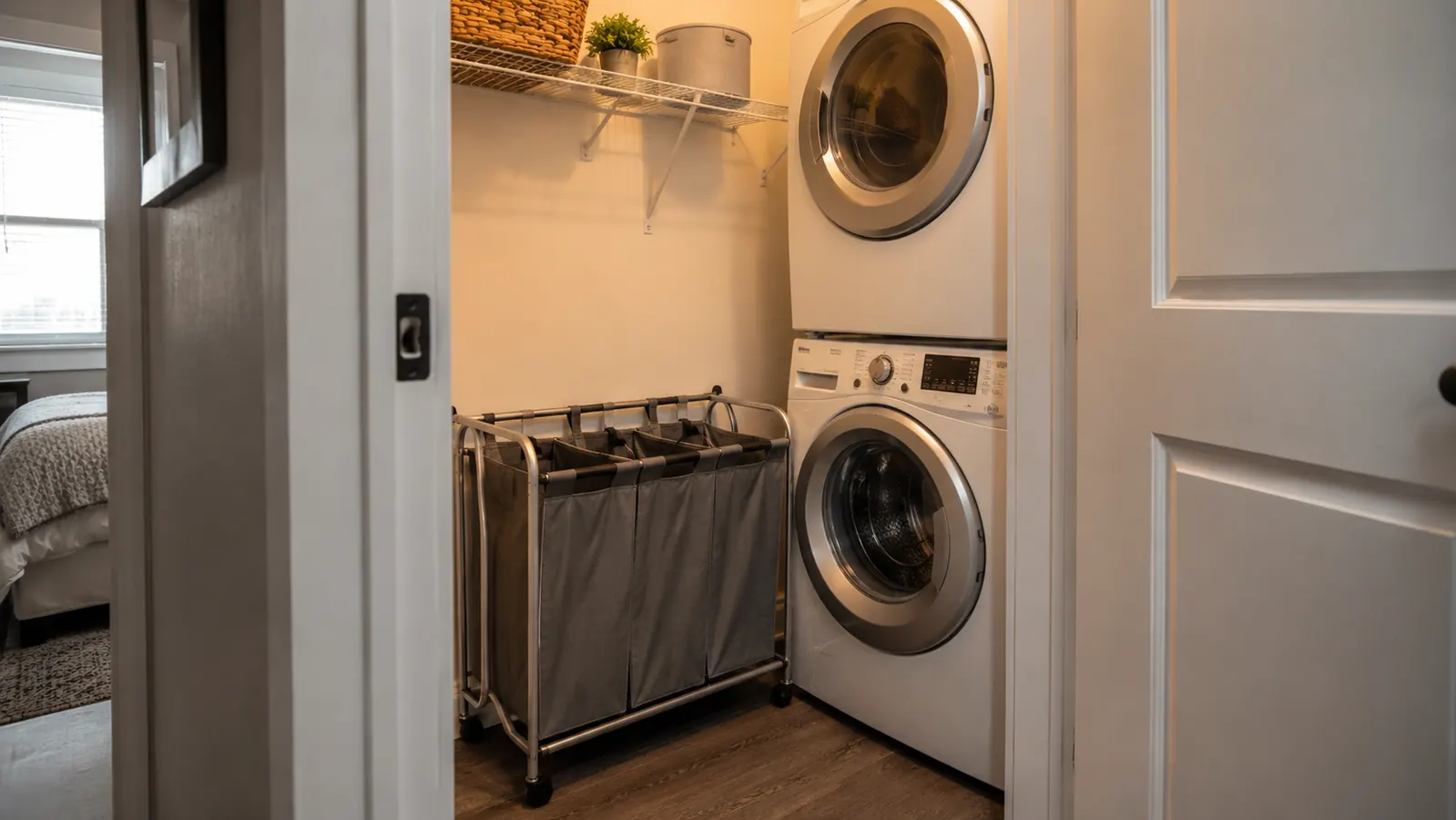
I have recommended this cart to clients across a range of laundry-room setups: apartments with stacked washer-dryer units, older homes with utility-room laundry corners, and one condo with a laundry closet so tight the sorter had to fit inside it. That variety matters because the Simple Houseware sorter behaves differently depending on floor surface, humidity levels, and how consistently it gets overloaded. I also looked at the product from the perspective of what it claims versus what it actually delivers, including the listed weight capacity, the bag material description, and the wheel specifications.
My evaluation came down to three questions: Do the bags hold up under real sorting habits, not careful ones? Does the frame flex or hold when people inevitably overstuff it? And do the wheels work as advertised across different floor types? The answers are not all the same, and the nuance is worth your time before you hit buy.
The Bags: Better Than the Price Suggests, With One Honest Caveat
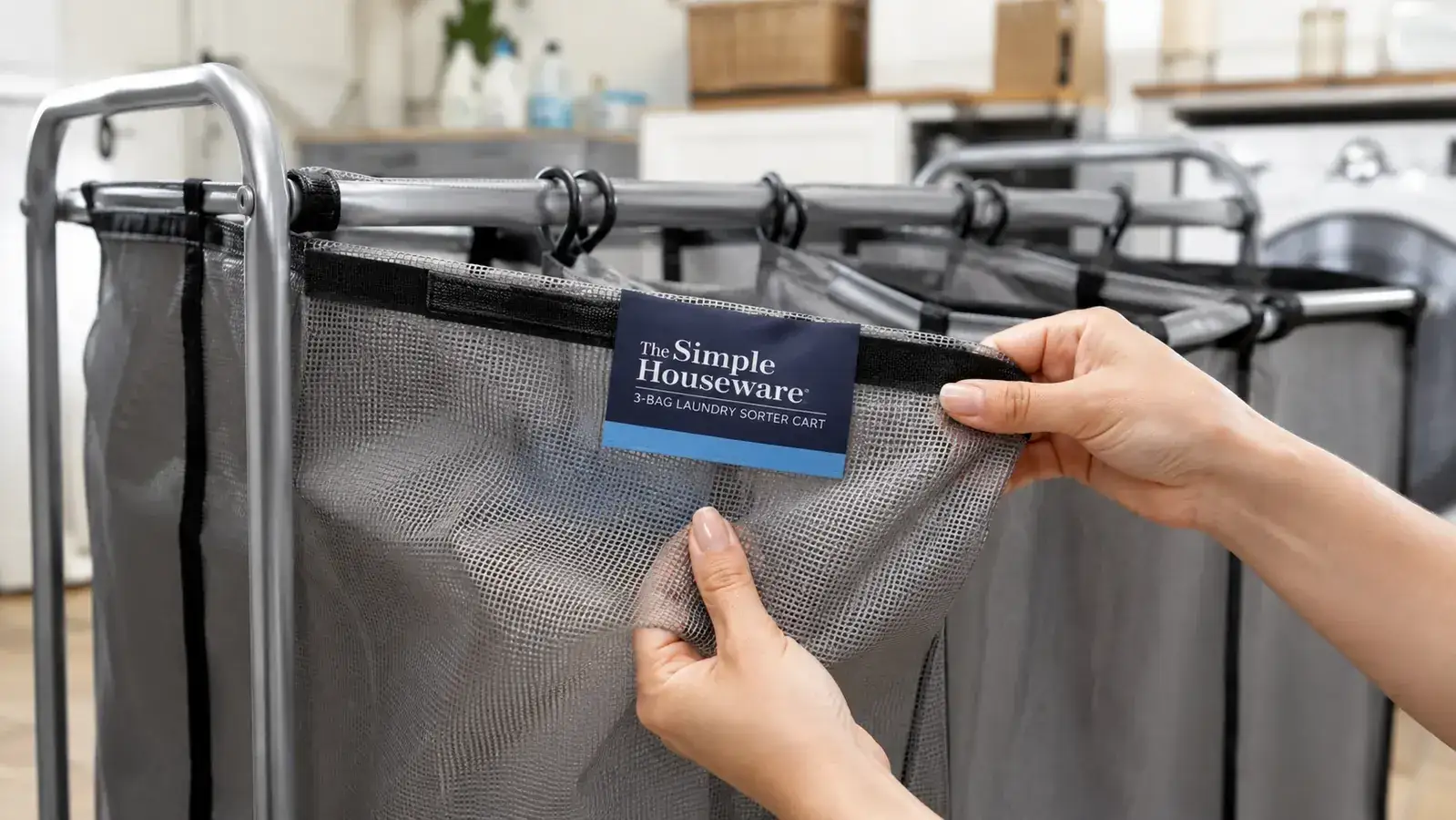
The three mesh bags are the part of this cart that most buyers either love immediately or dismiss as cheap. The reality is more specific than either reaction. The woven mesh fabric is sturdy enough to handle regular machine washing without shrinking or pilling, which is more than I can say for the flimsy nylon bags on some competing sorters in this price range. Each bag hangs from a metal ring that clips onto the frame, and the clip mechanism holds securely under normal laundry loads.
The caveat is this: the bags are sized for practical sorting, not maximum capacity. Each bag holds roughly one standard wash load comfortably, maybe a little over if you are sorting lighter items like t-shirts and underwear. Dense fabrics, think jeans, towels, sweatshirts, fill the bags faster than people expect. I have seen clients pile those items in and then wonder why the cart leans forward. It is not the frame. The bag material balloons outward and shifts the center of gravity. The fix is simple: sort heavier items as a standalone load before the bag is completely full rather than waiting until laundry day.
One more thing nobody tells you: the bags can be purchased separately as replacements. This is actually a good sign from the brand. It means the product was designed with the understanding that the bags are the consumable part and the frame is the durable part. If you plan to keep this cart for several years, budget for one set of replacement bags eventually and the cart becomes a much longer-term investment than the price implies.
The Frame: What the Steel Tube Construction Actually Means at This Price
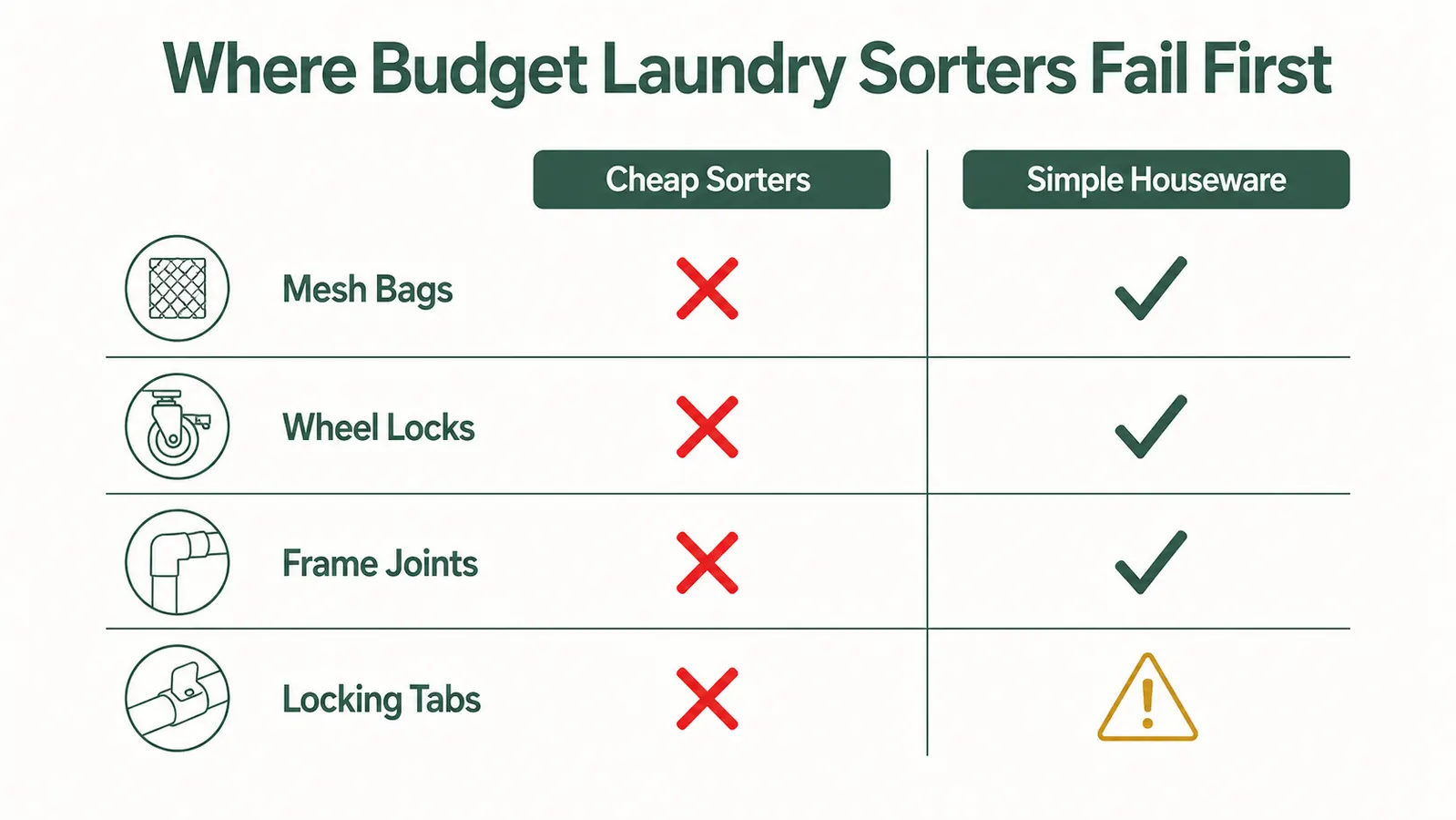
The frame is powder-coated steel tubing, and this is where the cart genuinely earns its rating. The coating resists the humidity that is unavoidable in any active laundry room. Joints are solid at assembly and do not loosen with normal use. I want to be precise about that last point because some one-star reviews describe loose joints and frame wobble, and in every case I have traced back the complaint, the pattern is the same: the user overfilled all three bags simultaneously and the combined weight exceeded the rated capacity.
The listed capacity is roughly 40 to 45 pounds across all three bags. That sounds like a lot until you realize a single bag packed with wet or heavy items can hit 15 pounds on its own. This is not a flaw unique to Simple Houseware. It is the physics of a rolling cart at this price tier. The frame was engineered for household sorting volume, not for treating the cart as a temporary storage unit between infrequent wash days. If you run laundry twice a week, the frame never gets overstressed. If you let laundry pile up for ten days and then stuff every bag to capacity, the frame will remind you that it has limits.
For context, I have seen more expensive sorters with heavier gauge tubing still show frame flex under similar overloading conditions. The difference is that heavier carts recover without any perceptible joint loosening. The Simple Houseware frame does the same when used within its intended range. It is not a commercial cart. It is a household cart that is very good at being a household cart.
The frame was designed for regular sorting, not long-term storage. Use it that way and the joint complaints you see in one-star reviews simply do not happen.
The Wheels: The Specific Thing Nobody Mentions About the Locking Tabs
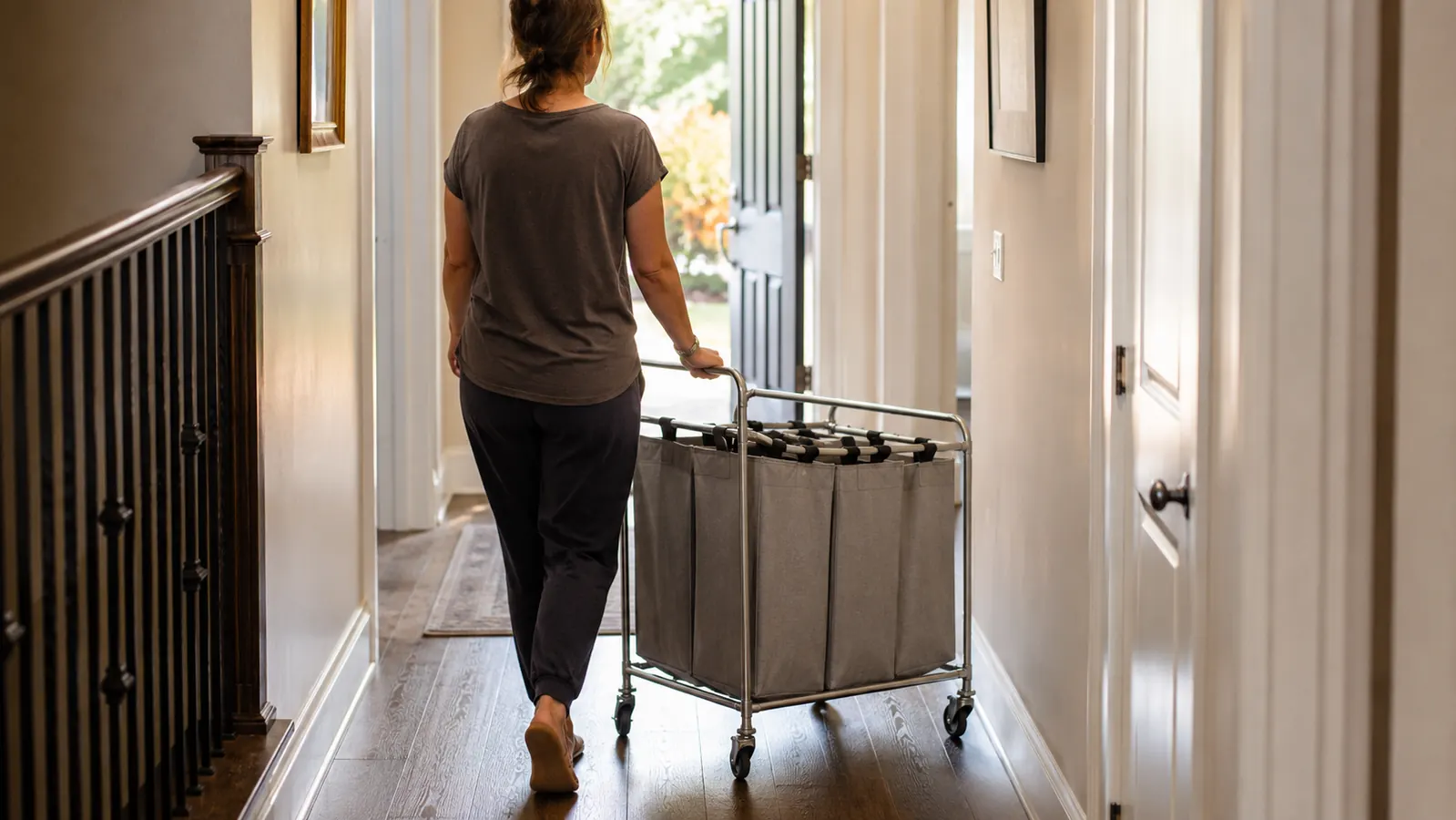
Four swivel casters, two with locks. On tile, hardwood, laminate, and bare concrete, the cart rolls with minimal effort, even when moderately loaded. This is a genuine strength of the product and one of the main reasons clients who switch from a stationary hamper arrangement do not go back. Rolling laundry to the washer instead of carrying it in a basket or over your shoulder is a small ergonomic change with a surprisingly large daily-life impact. I say this as someone who has helped dozens of households rethink their laundry workflow: the rolling wheel feature is not a gimmick.
Now for the honest part. The locking tabs are plastic, and they are noticeably less substantial than the metal frame they are attached to. They work via a small foot-press lever on two of the four casters. The mechanism functions correctly, and the locks hold under normal lateral pressure. But the plastic material feels like the one component where the manufacturer chose cost savings over longevity. If you are someone who locks and unlocks the wheels repeatedly every day, the tabs could show stress over time. For most household use, where you lock the cart in place and unlock it a couple of times a week, they hold fine. Just do not stomp on the lock tabs the way you might on a sturdier rolling kitchen island. A firm press is all they need.
One note on floor surfaces: the wheels do not perform on thick carpet or plush rugs. The casters are sized for smooth floors. If your laundry room or closet has soft flooring, rolling the loaded cart becomes more effort than it is worth, and the rolling advantage mostly disappears. This is not a design failure, it is just the nature of swivel casters. Know your floor before you commit.
Size Reality Check: Does It Fit in a Small Laundry Room?
Assembled dimensions are approximately 26 inches wide by 15 inches deep by 35 inches tall. The 15-inch depth is the number that surprises people most. Most laundry sorters have a wider footprint, and clients expecting a large cart are consistently relieved at how slim this one is from front to back. In a laundry room where every inch of floor space matters, that 15-inch depth is genuinely useful. The cart can sit in front of a washer without blocking the door swing if you position it at a slight angle.
The 35-inch height is well-calibrated for adults sorting standing up. You do not need to bend to drop clothes in, which sounds minor until you think about how many times a day you actually do it. For households with small children who are learning to sort their own laundry, the height may require them to stretch or use a small step. That is a practical consideration worth thinking through if you are trying to build laundry habits in kids under eight or so.
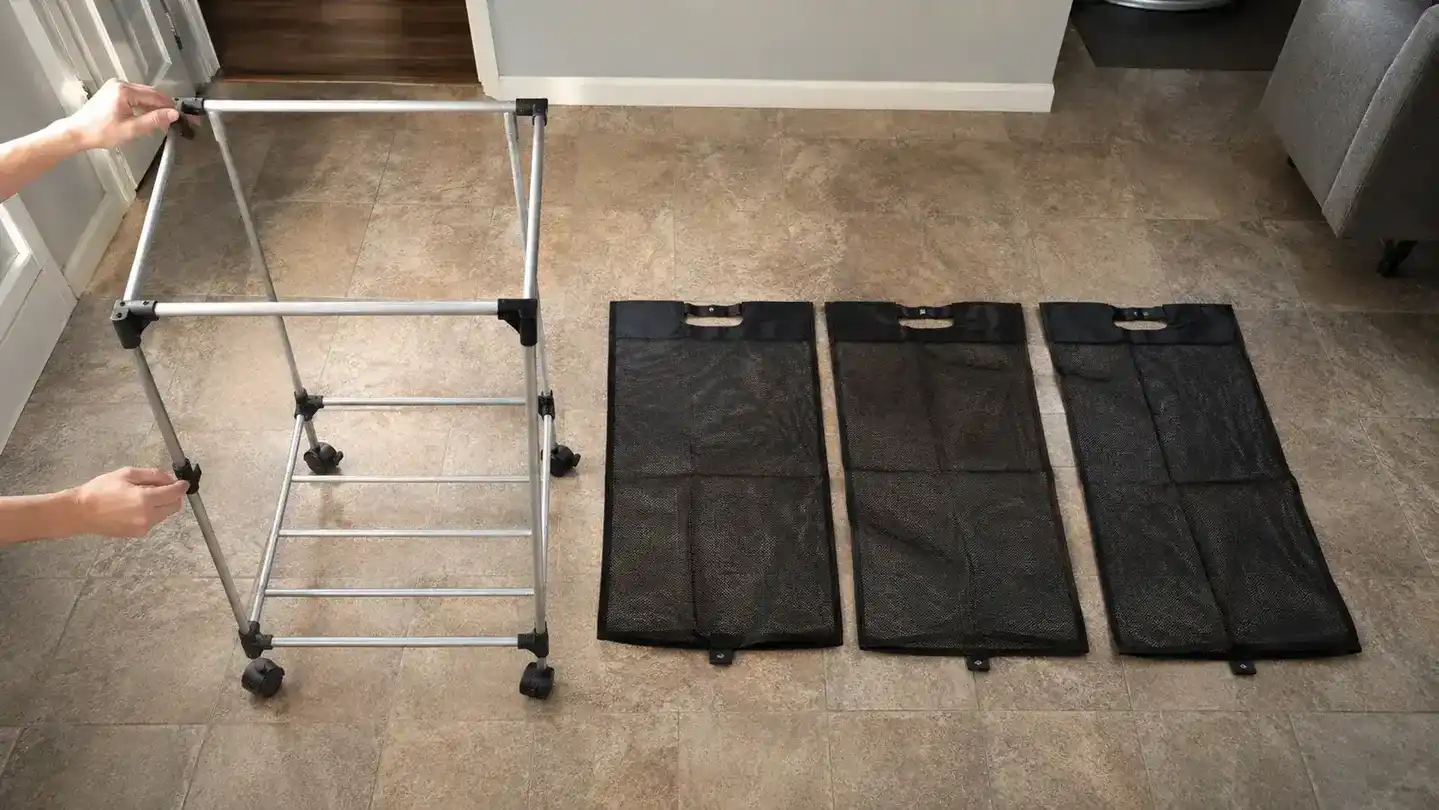
Assembly is straightforward: fifteen minutes, one wrench, numbered steps, and clear diagrams. The only thing worth noting is to fully assemble the frame before attaching any of the bags. Some people work bag-by-bag as they go and then struggle to tighten the last frame joint. Frame completely first, bags last, and the whole process is smooth.
What the 25,000 Reviews Are Not Telling You
The volume of positive reviews creates a kind of social proof shortcut that actually obscures some useful details. Most of those reviews were written early in the product's life in the reviewer's home, before the bags had gone through repeated wash cycles, before the locking tabs had been used daily for months, and before anyone had tested what happens when a busy household lets laundry pile up past the intended load. The product holds up well under informed use. Under uninformed overuse it performs like most budget carts, which is to say adequately at first and unevenly over time.
The things the review pool does tell you clearly: assembly is genuinely easy, the cart fits in tight spaces, and the rolling function changes laundry-day workflow in a way most buyers did not expect to care about but do. Those are consistent threads across thousands of reviews and they are accurate. If you also want to understand how to build a full sorting routine around this cart, the 10 reasons a rolling laundry sorter saves time article breaks down the weekly time advantages in concrete terms.
What I Liked
- Frame is powder-coated steel that resists humidity and holds its joints under normal household loads
- 15-inch depth footprint fits in laundry rooms, closets, and tight utility spaces where wider carts do not
- Bags are machine washable and sold separately as replacements, making the frame a long-term asset
- Rolling wheels work effortlessly on tile, hardwood, and laminate, changing laundry-day ergonomics noticeably
- 26-inch width accommodates three useful sorting sections without dominating a small laundry room
- Charcoal-colored mesh bags hide lint and dust well between washes
Where It Falls Short
- Locking tab material is plastic and feels noticeably less robust than the steel frame it connects to
- Bag capacity fills faster with dense items like towels and jeans than the stated load range implies
- Wheels do not roll on thick carpet or plush rugs, which eliminates the main functional advantage
- Open-top bag design offers no odor containment for gym clothes or damp towels
- Consistently overfilling all three bags simultaneously will stress frame joints over time
Who This Cart Is For
The Simple Houseware 3-Bag Rolling Sorter is the right product for households of two to five people who do laundry regularly rather than episodically, have hard-floor laundry areas, and want a sorting system that is compact enough to fit into a real laundry room layout without dominating it. It is also a strong choice for anyone currently running multiple separate baskets across different rooms, because the single rolling cart consolidates the gather-and-carry step into something much more efficient. The long-form breakdown of whether it fits a specific household is in the Simple Houseware laundry sorter long-term review, which covers real-world use patterns in detail.
Who Should Skip It
Skip this cart if your laundry area is carpeted, you prefer lidded hampers for smell control, or your household generates a volume of laundry that would require filling all three bags to maximum capacity before each wash day. At high volume or on soft flooring, this product's strengths become irrelevant and its limitations become frustrating. A heavier-gauge sorter or a commercial laundry cart would serve you better in either of those scenarios. Similarly, if you need a cart that doubles as storage between infrequent laundry sessions, the weight accumulation over several days will exceed what this frame was designed to handle without stress.
The frame is solid, the bags are honest, and the wheels work. Budget-friendly pricing is fair for all three.
If your laundry room has hard floors and you have been tolerating a scattered hamper situation longer than you should have, this is the cart that fixes it. Check today's price on Amazon and see if it fits your budget.
Amazon Check Today's Price on Amazon →