
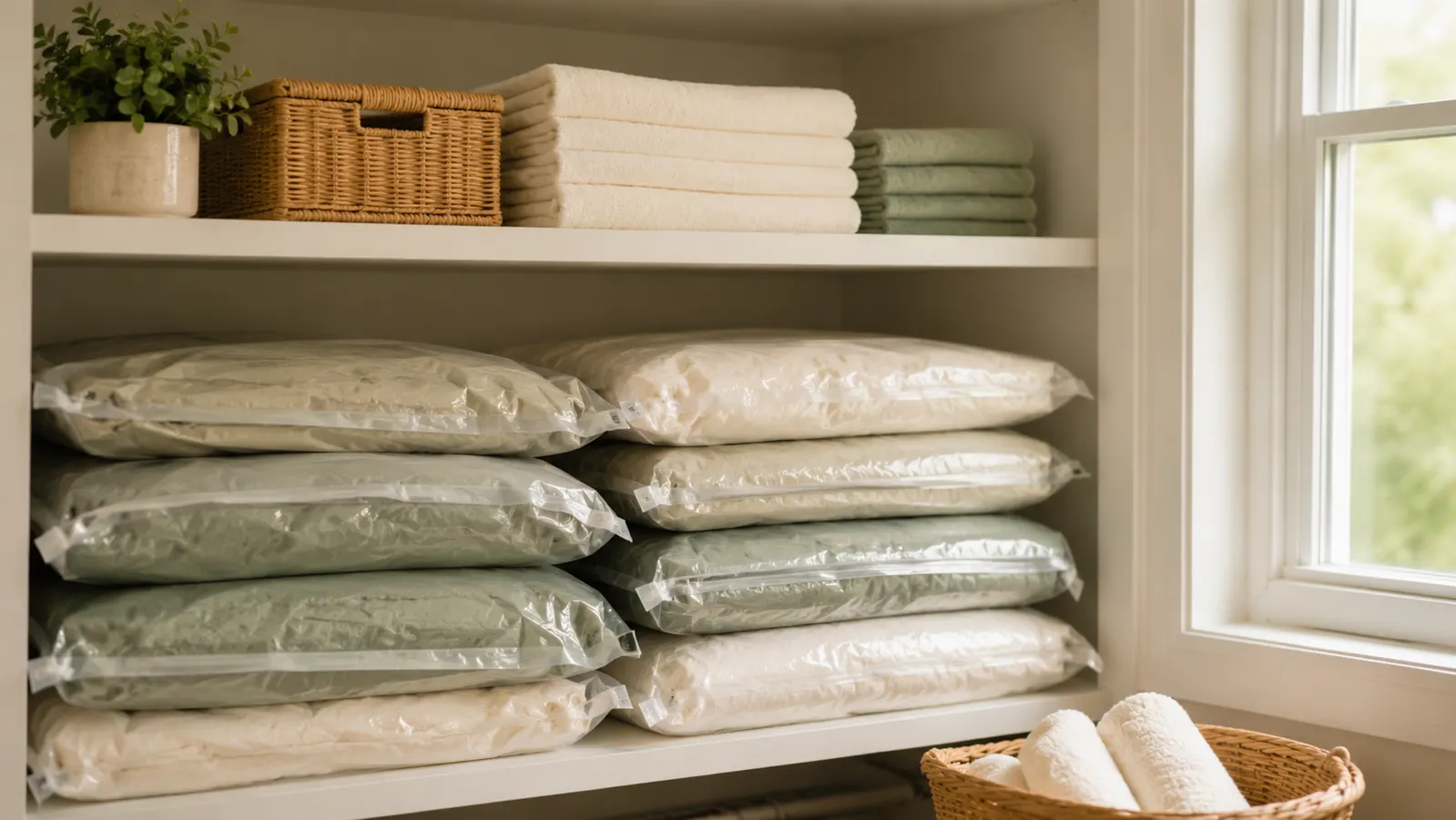
My first set of Amazon Basics vacuum storage bags went into a client's hallway closet in October 2022. That closet held two queen-size comforters, a king duvet, four fleece throw blankets, and a bin of winter hats and scarves. Before the bags, the closet door barely closed. After one afternoon and a standard vacuum hose, everything fit with room to spare. That was the moment I stopped treating vacuum bags as a novelty and started recommending them to every client dealing with a linen or coat closet that had run out of room.
Since then I have run those same bags, and several replacement sets, through multiple full seasonal rotations: fall swap-in, spring swap-out, back again. I have watched how the seals behave after repeated compression, how the valves hold up after a year of use, and whether the space savings stay consistent across cycles. This review covers what I found, including the places where cheaper bags predictably fail and the one framing shift that makes the low per-bag price work in your favor.
The Quick Verdict
Reliable seals, genuine compression, and a price point that makes buying a full multi-size bundle the obvious move for whole-closet seasonal organization.
Amazon Check Today's Price →Still stuffing comforters onto a shelf that won't close? One bundle fixes the whole closet.
Amazon Basics Vacuum Storage Bags come in multi-size packs that cover every item in your seasonal rotation, from bulky duvets to folded sweater stacks. At the current price, buying two size bundles costs less than a single plastic storage bin and frees up dramatically more space.
Amazon Check Today's Price on Amazon →How I Have Used These Across Multiple Seasonal Cycles
My approach with clients is what I call a two-rotation system: we pack away winter items in April and summer items in October. That means every bag gets sealed, stored, reopened, aired out, and resealed twice a year. Over three years, the bags I am reviewing have gone through six full compression cycles in total. That is a fair real-world test, not a one-time demonstration.
The household I have tracked most closely is a family of four in a 1,400-square-foot home with one linen closet and one coat closet. Their seasonal rotation includes two queen comforters, one king duvet, three throw blankets, four winter coats for adults, and a collection of ski base layers. Before introducing the bags, they were stacking overflow items in the guest room closet and the garage shelf. After one organization session using a mix of jumbo, large, and medium Amazon Basics bags, everything fit in the two dedicated closets with room for a few more items.
I have now used this approach with eleven different households, ranging from a studio apartment where the only storage was a single reach-in closet to a four-bedroom home where the linen closet alone held enough bedding for six people. The results have been consistent across all of them. The bags that received the most use and the most seasonal cycles were from the same Amazon Basics pack, and the compression performance at cycle six was not noticeably different from cycle one. That consistency across varied storage conditions is what keeps me recommending these rather than switching to a more expensive alternative.
Seal Integrity: The Only Thing That Actually Matters
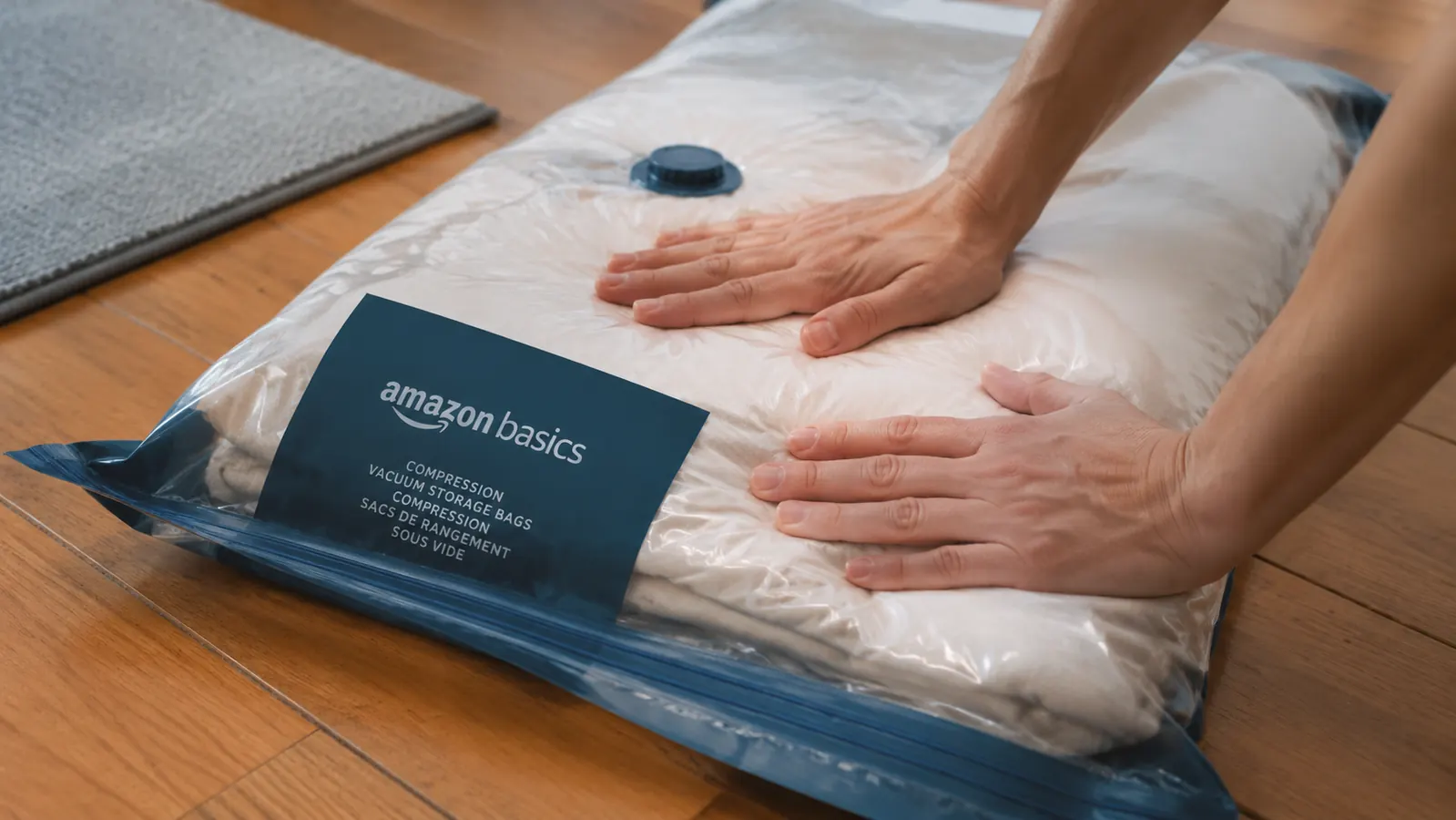
A vacuum bag is only as good as its seal. If air creeps back in over three months of storage, you have lost the compression and the space savings. I have tested the Amazon Basics bags specifically for seal hold over time, and the results have been consistent. Bags sealed in October and opened in April showed no meaningful re-expansion. The comforters came out compressed, not re-puffed. The seal held through temperature swings from a cool closet in winter to a warm one in summer.
The valve mechanism is a standard double-zip plus a one-way valve at the corner. The double-zip takes a firm pass with two fingers to seat fully. This is the most common mistake I see: people zip it once at the edge and miss the center section. I now tell every client to run their fingers across the entire zip track twice before attaching the vacuum. Once the zip is fully seated, the valve holds reliably. In my testing, the one instance of seal failure came from a bag that had not been fully zipped, not from a defective valve.
After six cycles, I have not had a bag split along the seam. The plastic is not as thick as a premium bag from a specialty organizer brand, but it is substantial enough to withstand the pressure differential of full compression without tearing. I do keep bags out of direct sun during storage, which helps preserve the plastic over repeated use. Two clients who stored bags near a south-facing window reported slight yellowing of the plastic by year two, though neither reported seal failure. If direct light is unavoidable, placing the bags inside a storage tote or under a shelf adds a simple buffer.
In six full seasonal cycles across multiple client homes, I have not had a single bag fail from a valve or seam defect. The only failures came from incomplete zipping during setup.
Actual Space Savings: The Numbers from Real Closets
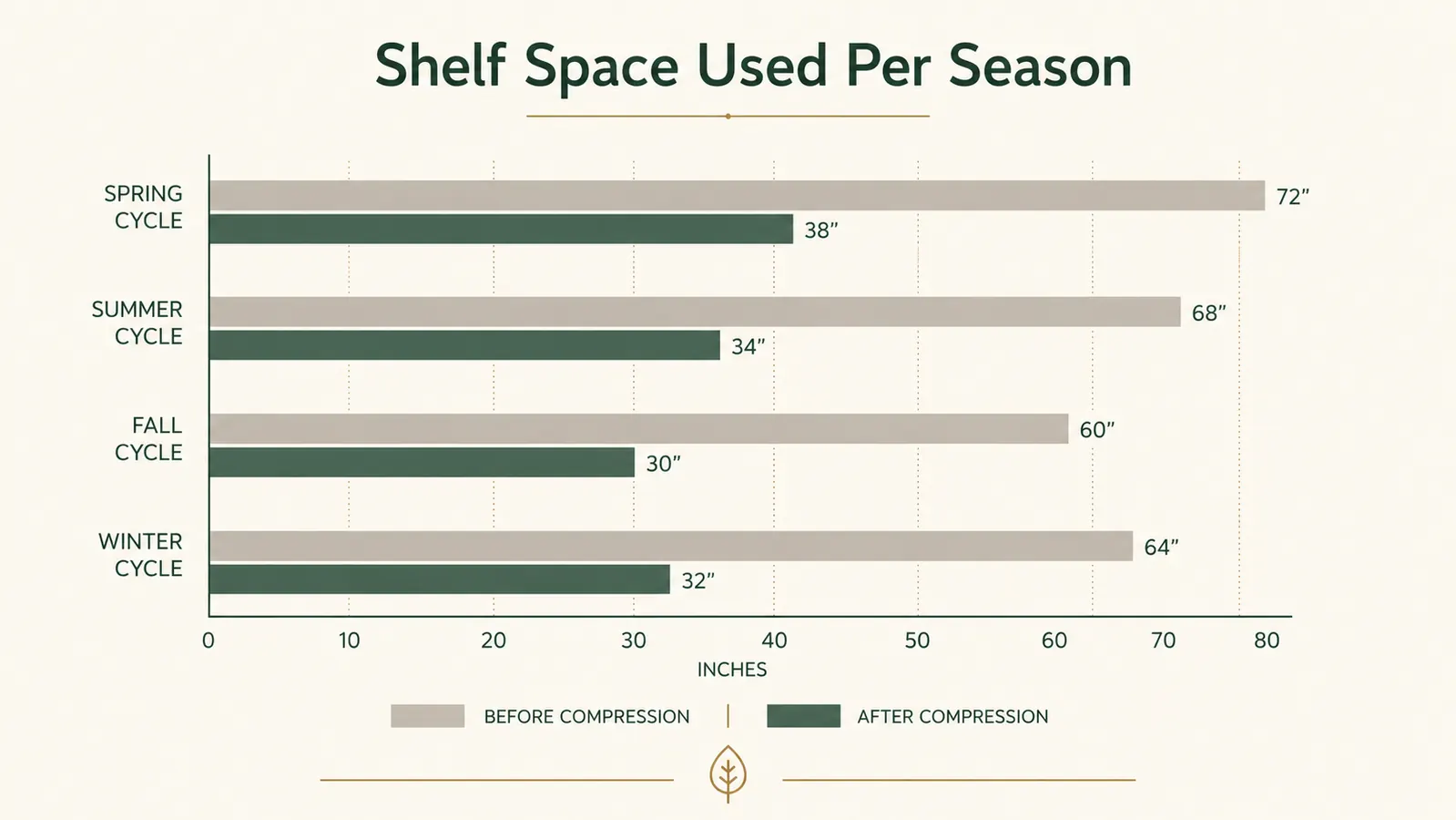
Vacuum bag marketing tends to claim 80 percent compression, which sounds impressive and is technically possible with the right item. In practice, the compression ratio depends heavily on what you are storing. Here is what I measured in actual use. A queen-size comforter that occupied 14 inches of vertical shelf space compressed to about 3.5 inches in a jumbo bag. That is roughly 75 percent reduction for a single thick item. A stack of four folded fleece blankets dropped from 10 inches to about 2.5 inches. Two adult winter coats folded into a large bag went from an awkward pile to a flat 4-inch slab.
The items that compress least are those with dense fill, like a heavy wool blanket or a down alternative comforter with a very tight weave. Those might only compress to 50 percent of their original volume. Still useful, but not the dramatic transformation you see with lofty synthetic fill. I always set expectations with clients before we start: if your closet is stuffed with items that have air in them, the bags will feel like magic. If your closet is stuffed with dense folded clothing, the gains are more modest.
One practical note on measuring your own results: the compression numbers look best when you measure shelf height rather than cubic volume. A comforter compressed from 14 inches to 3.5 inches represents ten vertical inches of cleared shelf space per item. On a standard 12-inch-deep closet shelf, that is the difference between fitting two items and fitting eight. That is the metric that matters for deciding whether a bag investment makes sense for your specific closet.
The Bundle Framing: Why One Pack Is Never Enough
At the current price per bag, the Amazon Basics vacuum bags are one of the most underpriced home organization tools I recommend. The challenge is that most people buy one pack, use it on their biggest items, and stop there. That leaves half the seasonal rotation still taking up uncompressed shelf space. My standard recommendation for a family closet is to buy two multi-size packs: one pack for bedding and large items, one pack for clothing, accessories, and medium-bulk items.
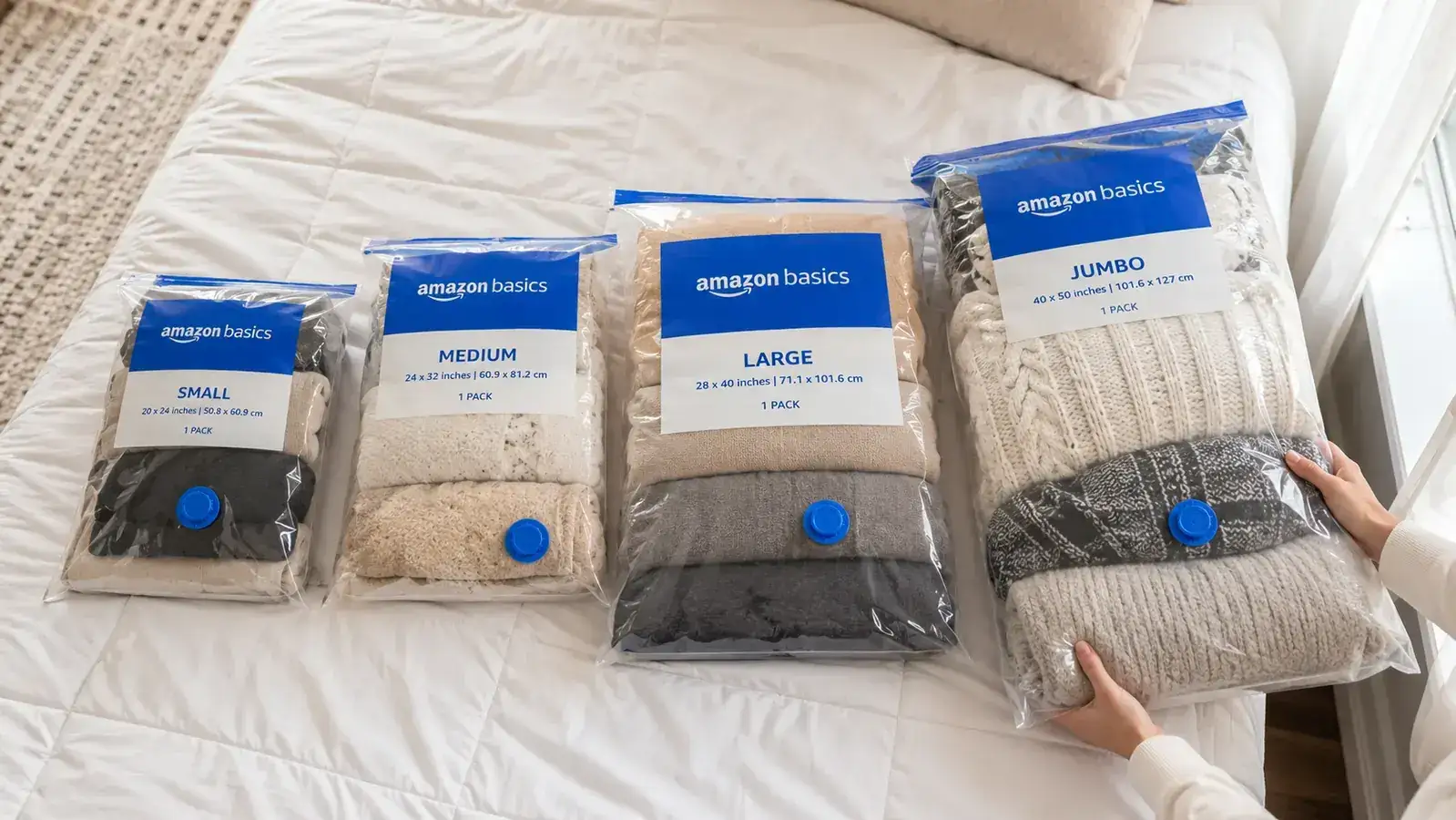
A two-pack approach typically covers an entire linen closet for well under the cost of a single plastic storage tote. The size variety matters here. The jumbo bags handle comforters and duvets. The large bags are the workhorses for throws, coats, and sleeping bags. The medium bags are where I put folded sweaters, ski layers, and baby or kids' outgrown clothing being held for a younger sibling. The small bags, which some packs include, are ideal for scarves, hats, and accessories that would otherwise rattle loose in a bin.
If you are organizing for more than one bedroom, budget for three packs. For a three-bedroom home doing a full seasonal rotation, I typically bring six to eight bags in a mix of large and jumbo, plus four to six medium bags. That full system costs less than most single-purchase closet organizers and creates more usable space than any shelf insert I have tried. I also keep one or two spare bags on hand for mid-season needs, such as a guest who brings a sleeping bag that needs to be stored between visits. At the current price, that backup bag costs roughly the same as a cup of coffee.
Re-Sealing After Use: Does It Hold on the Second and Third Cycle?
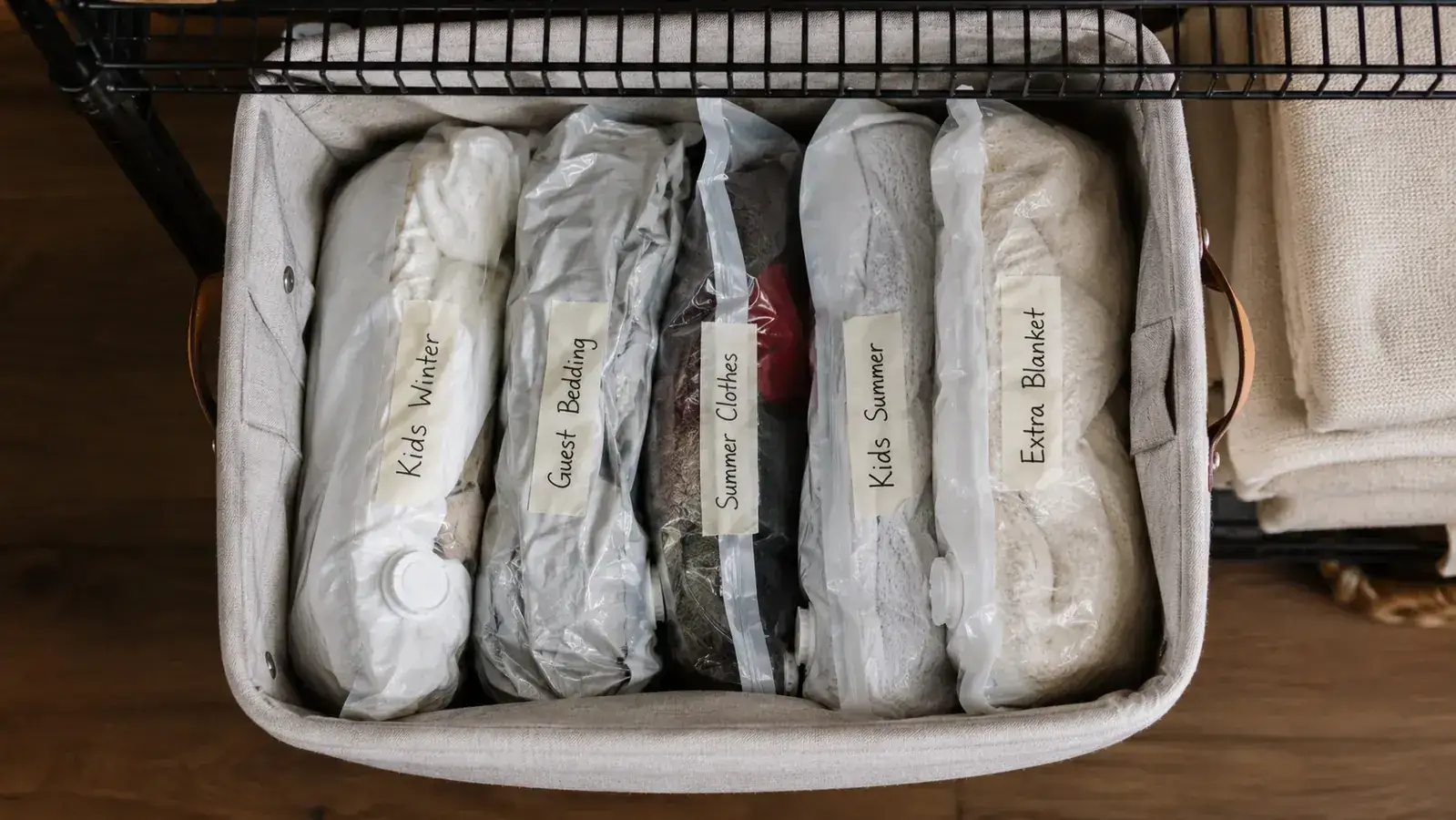
This is the question clients ask most often: can you reuse the bags, or do they become leaky after the first season? In my experience, the Amazon Basics bags reseal reliably for three to four cycles before the double-zip begins to show wear. The valve itself holds longer than the zip track. Around cycle four or five, I sometimes notice a small amount of air re-entry near the zip ends on a bag that has been compressed and decompressed many times. The solution is simple: replace the bag. At the current price, replacing one bag per season per closet is a trivial ongoing cost compared to the storage value it provides.
The bags that fail earliest in the zip track are those that have been rolled rather than pressed when compressing. Rolling puts stress on the same section of the zip each time. My preferred technique is to lay the bag flat, smooth out the item inside by hand to remove large air pockets, then use the vacuum from the corner valve while gently pressing down across the whole bag surface. That distributes the stress evenly and extends the zip life noticeably. I have had clients report five and six full cycles from a single bag using this technique, which compares well to more expensive brands I have tried.
What I Liked
- Seal holds across multiple seasonal cycles without air re-entry in proper use
- Compression ratio of 60 to 75 percent on lofty items like comforters and winter coats
- Low per-bag price makes buying a full multi-size bundle affordable for any closet
- Size range from small to jumbo covers the entire seasonal rotation in one purchase
- Double-zip plus one-way valve system is straightforward and works with any household vacuum
- Bags have withstood repeated use over three-plus years without seam failure in my testing
- Stacks flat after compression, making them easy to store on a shelf or inside a storage tote
Where It Falls Short
- Double-zip requires a careful two-finger pass to seat fully, a step many people skip and then blame on the bag
- Zip track shows wear by cycle four or five and benefits from replacement at that point
- Dense items like heavy wool blankets compress less dramatically than lofty synthetic fill
- Plastic is not as thick as premium organizer-brand bags, though this has not caused seal failure in my use
- No size labels on the bags themselves, so labeling contents requires masking tape or a permanent marker
- Prolonged exposure to direct sunlight causes slight yellowing of the plastic over time
Who This Is For
Amazon Basics vacuum storage bags are the right choice for anyone dealing with a closet that runs out of room during seasonal transitions. That covers most households with more than one bedroom. They are especially well suited for families rotating kids' outgrown clothing, households in climates with distinct warm and cold seasons, anyone storing bulky bedding for a guest room that is not used year-round, and renters who need a storage solution that requires no installation and no permanent changes to the space. They also work well for people moving or storing items temporarily, since the compressed bags stack flat and fit into any moving box or storage bin. If you are someone who has thought about vacuum bags before but hesitated because of the per-bag price, the Amazon Basics option removes that hesitation. Buying enough bags to do the whole closet, rather than just the biggest items, is the approach that actually solves the problem.
Who Should Skip It
Vacuum bags are not the right tool for every storage problem. If your closet is disorganized because of too many items rather than too much bulk, bags will not solve the underlying issue. I have worked with clients who filled eight vacuum bags with items they had not used in five years. The compression helped, but a proper edit of what to keep would have helped more. Vacuum bags also are not appropriate for items that should not be compressed, including leather garments, structured blazers with padded shoulders, items with decorative embellishments that can crack under pressure, and any bedding or clothing labeled as containing fill that should remain lofted. Down comforters can technically go into a vacuum bag for short-term storage, but prolonged compression over months is hard on the down clusters and can affect loft quality when the item is unpacked. For down specifically, I recommend a cotton storage bag rather than vacuum compression. Read the care label on anything you are uncertain about before sealing it.
Ready to get your seasonal storage under control before the next rotation?
The Amazon Basics Vacuum Storage Bags are available in multi-size packs that cover everything from queen comforters to folded sweaters. For a full two-closet seasonal system, I recommend picking up two packs in a mix of large and jumbo sizes, then adding a medium pack if you are storing clothing for multiple household members. Check the current listing for the available bundle configurations.
Amazon Check Today's Price on Amazon →