
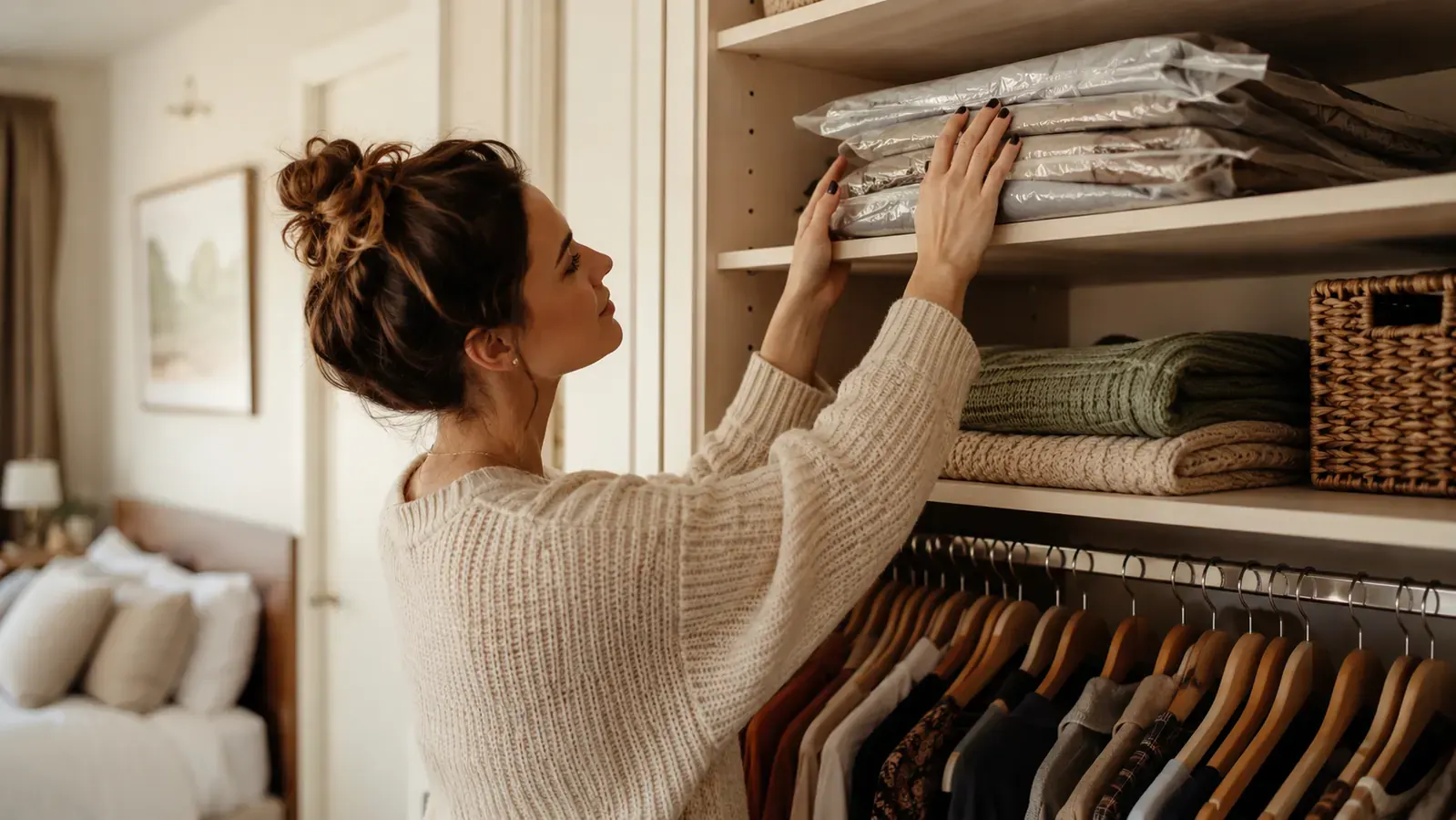
I have organized more than 400 homes in fifteen years. I have seen walk-in closets stuffed so full the door would not close, and master bedrooms where the floor was the real storage system. I have never once judged a client for it. Clutter is not a character flaw. It is usually just a space problem with no good solution in sight. That is the line I have used at every consultation, and I still believe it. What I am not proud of is that I spent years repeating it while ignoring one of the most straightforward solutions sitting right in front of me.
My clients mentioned Amazon Basics vacuum storage bags constantly. 'I already have some of those vacuum bags, should I use them?' I would give a careful answer about making sure items were clean and dry before sealing, and then redirect us toward better bins or a drawer divider. I had never actually used them myself, and something about that felt easier not to examine too closely.
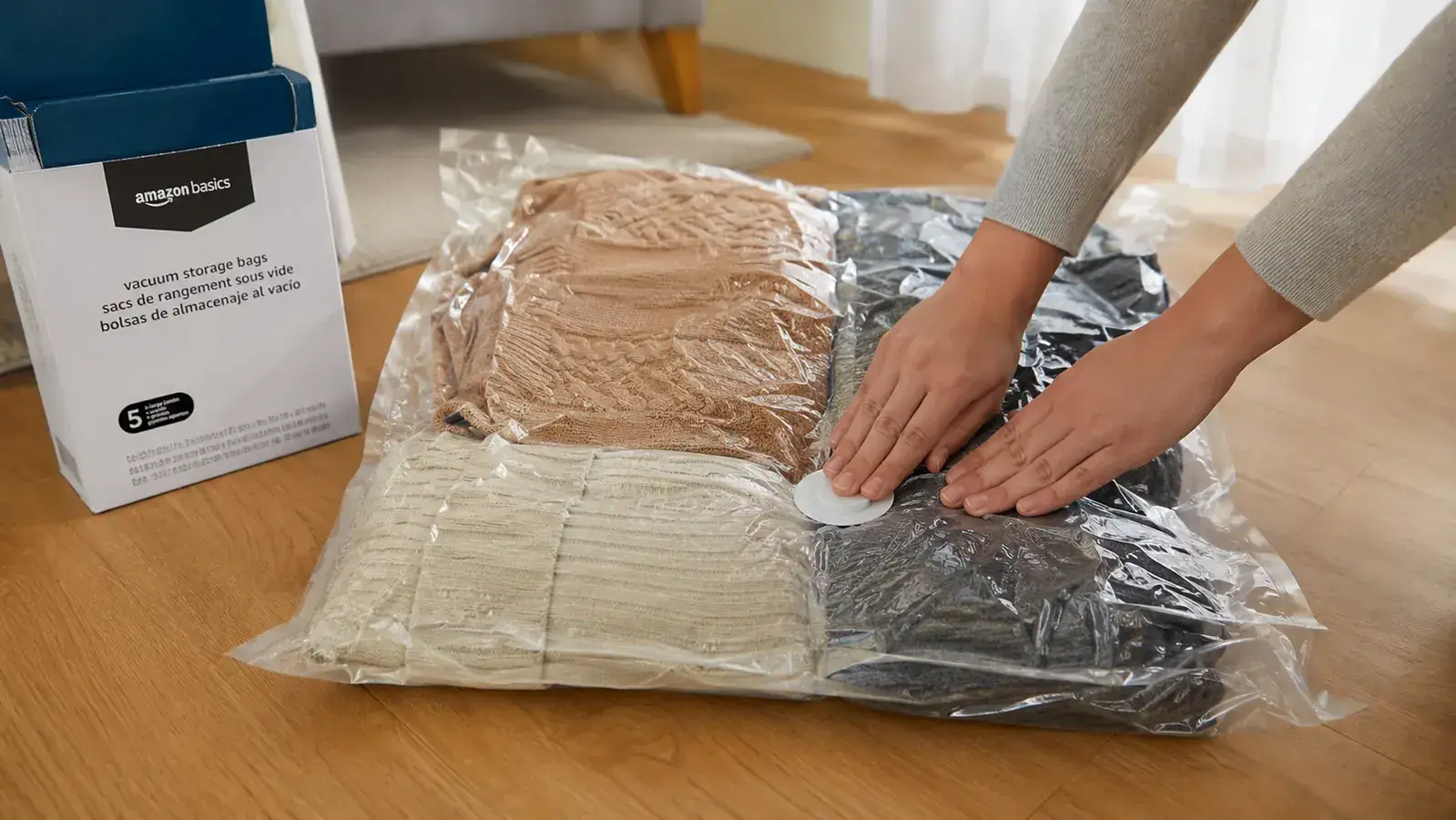
Last October I decided to stop being a hypocrite. My own guest bedroom closet had become the family shame spiral. Two winter coats that only come out in January. A king-size duvet we rotate in for guests. Four throw blankets my daughter has collected since college. A quilted mattress pad from a bed set we no longer own but cannot bring ourselves to donate. The shelf above was buckling. I had no room for anything else.
I ordered a set of Amazon Basics vacuum storage bags on a Thursday. They arrived Saturday. On Sunday morning I made coffee, opened the box, and got to work.
Your closet shelf has more room in it than you think.
Amazon Basics vacuum storage bags compress bulky seasonal items down to a fraction of their size. Over 92,000 buyers have made the same Sunday discovery I did.
Amazon Check Today's Price on Amazon →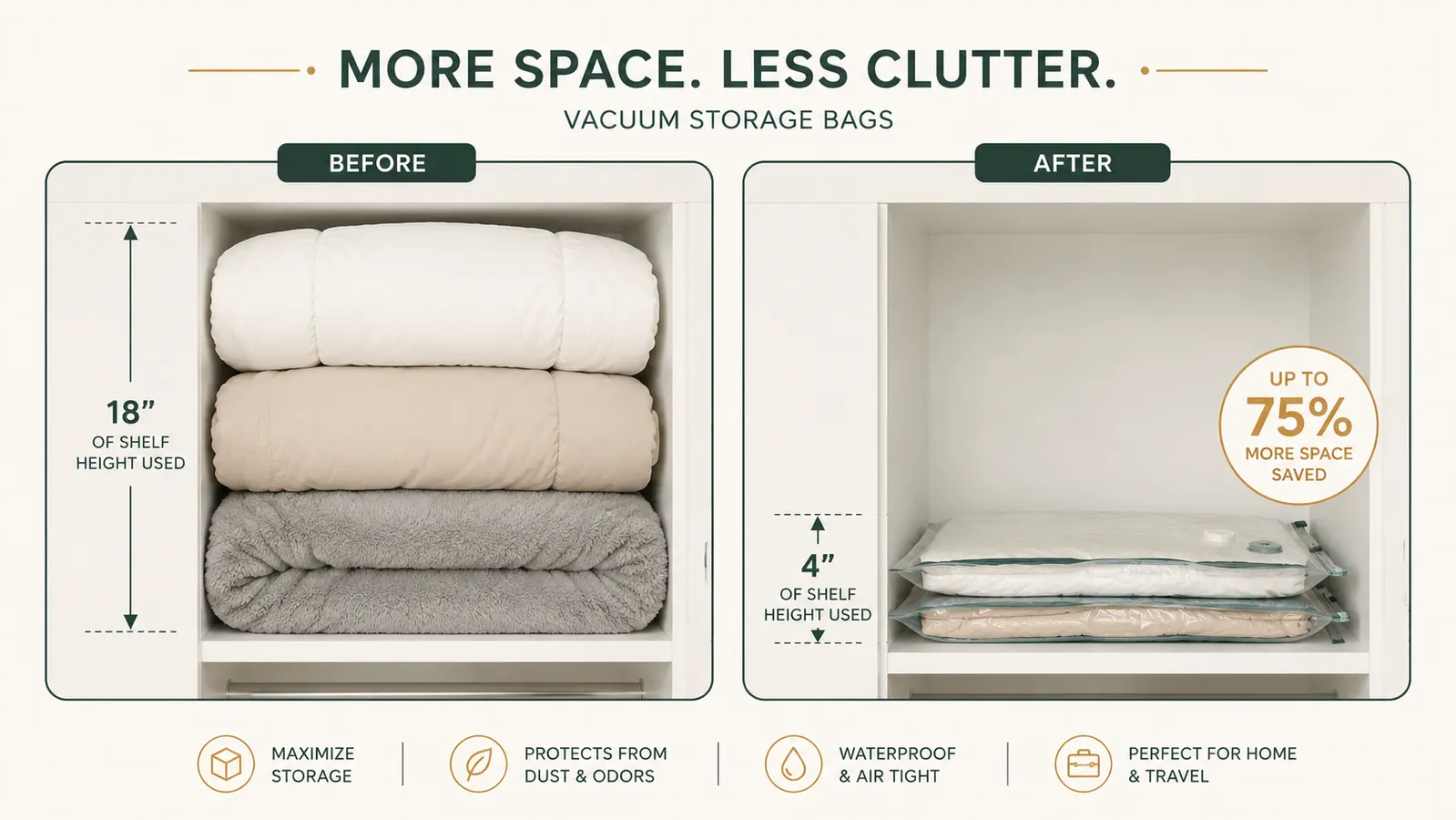
The first bag I packed was the king duvet. I folded it as flat as I could manage, which was still about the size of a large dog, and fed it into the large bag. Sealed the zipper. Attached the vacuum hose to the valve and turned it on. What happened over the next forty seconds genuinely startled me. The bag went from a puffy mound to something I can only describe as a flat rectangle about three inches thick. I picked it up. It felt like a firm throw pillow. I set it on the shelf and stared at the space where a king duvet used to live.
The bag went from a puffy mound to a flat rectangle about three inches thick. I picked it up. It felt like a firm throw pillow. I set it on the shelf and stared at the space where a king duvet used to live.
I kept going. Both winter coats went into a second large bag together. The four throw blankets split across two medium bags. The orphaned mattress pad went into its own bag. By the time I was done I had five flat packages where a mountainous heap used to be. They stacked on the shelf in a single tidy row with enough room left over that I added a labeled bin for extra pillowcases I had been storing on the floor of a completely different closet. The whole project took about ninety minutes including the time I spent labeling each bag with a strip of masking tape and a marker.
I do want to be straight with you about what these bags are and are not. They work best for soft, compressible items: down, fleece, cotton, wool. Do not try to use them for anything structured, anything with memory foam, or anything with dry-clean-only care labels that explicitly warn against compression. I also had one bag lose its seal after about six weeks on the shelf and had to re-vacuum it. That happens occasionally and it is a minor inconvenience, not a dealbreaker. The bags reseal with the same valve and your regular vacuum. You are back to flat in under a minute. I now check all my bags once a season before I need the contents, which takes about five minutes for the whole closet.
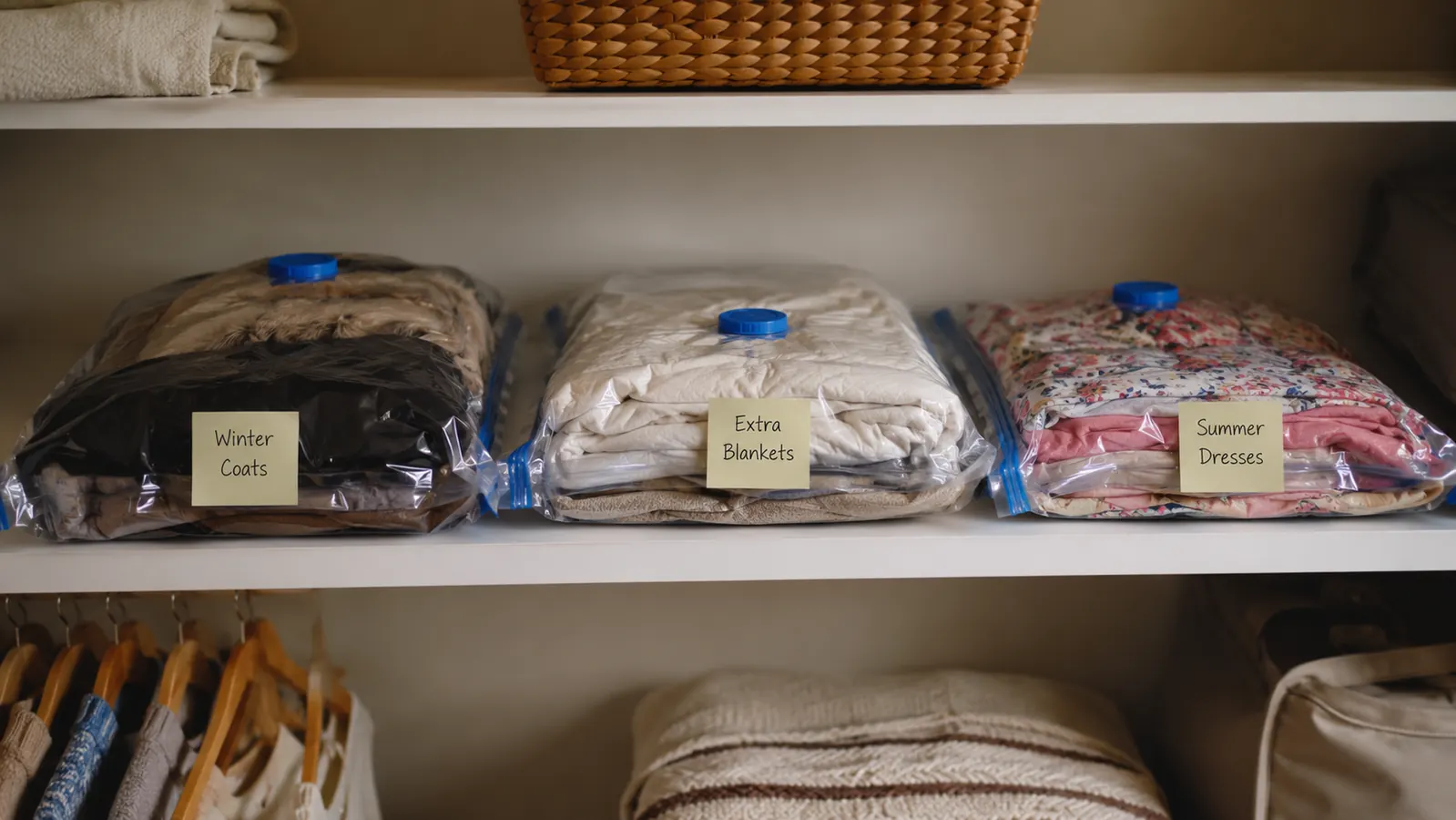
The size variety in the set I bought covered everything I needed. If you want to go deeper on which sizes work for which items, or how these compare to SpaceSaver bags which some of my clients prefer, I have written both of those pieces. Links are at the bottom of this page.
What I Would Tell You If We Were Sitting at My Kitchen Table
If you have seasonal items taking up shelf space right now, bulky things you use once or twice a year, vacuum bags are not a gimmick. They are one of the few storage products where the result is immediately, visibly obvious. You press the air out, you see the space appear, and you do not need me to explain the value. It is right in front of you on the shelf.
I spent fifteen years steering clients toward bins and baskets and drawer organizers, all useful things. But I had never fully reckoned with the fact that some spaces are already organized. They are just physically full of air trapped inside soft things. Vacuum bags solve that specific problem faster and more directly than anything else I have found, and they cost less than a single good storage bin. I wish I had tried them in year one instead of year fifteen.
One Sunday afternoon, one order. Your shelf will thank you by Monday.
Check current pricing and availability for Amazon Basics vacuum storage bags. The set I used included multiple sizes and handled everything from a king duvet to four throw blankets in a single session.
Amazon Check Today's Price on Amazon →